 Bank Zenit
 Renaissance Bank
 LOCO-Bank
 T-Bank
 Bank Sinara
 Credit Europe Bank






The bank is asking where the money came from: how to answer

Имеет ли право банк спрашивать, откуда появились деньги
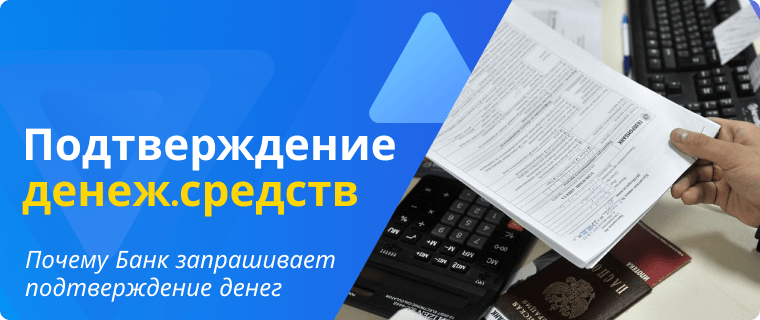
Banks closely monitor the movement of funds not only for commercial organizations, but also for LLCs, individual entrepreneurs, and individuals. This is completely legal. They act in accordance with Federal Law No. 115-FZ "On Countering the Legalization (Laundering) of Criminally Obtained Incomes and the Financing of Terrorism" dated August 7, 2001, the purpose of which is to timely detect illegal receipt (transfer) of funds and prevent the financing of criminal groups.
Therefore, financial institutions have every right to ask questions about the origin of money and demand documents confirming the lawful transfer (receipt) of funds. Until circumstances are clarified, the bank may block accounts and, in extreme cases, terminate the agreement.
Article 6 of Federal Law No. 115-FZ states that money transactions are subject to mandatory control if the amount exceeds 600,000 RUB.
Для чего банки запрашивают эту информацию
If the bank asks to provide documents on the origin of money, this is not a whim. It must report to the Central Bank, explaining the purpose of all financial transactions. Financial institutions, in turn, demand documents from clients. If the requirements of the Central Bank are ignored, the servicing financial institution may have its license revoked.
In other words, if the bank cannot report to the Central Bank for all transactions carried out on the accounts of suspicious clients, it will be held liable.
Real-life example. Valentina Sergeevna says that her son transferred 30,000 RUB to her. The amount is small, but the bank demanded documents to prove that the money was received from a close relative.
These are already excessive measures, but such cases are not isolated. Financial institutions can request certificates even for penny transfers.
Подберем предложения под вашу ситуацию
Оставьте телефон — покажем варианты с высокой вероятностью одобрения и актуальными условиями.
- Проверенные предложения
- Без звонков от менеджеров
- Результат в удобном канале
What the bank will ask
The bank asks to provide documents confirming the legitimacy of the funds in the account.
According to bank regulations, various transactions may be considered suspicious if the client:
- cannot properly explain the nature of their activity;
- provides information that is hard to believe;
- has multiple bank cards and open accounts;
- acts nervous during a conversation with a bank employee;
- shows unusual interest in legislative requirements regarding financial monitoring;
- financial transactions do not match the client's risk profile.
For example, a student opens a large deposit. An employee of a machine-building plant with an average salary of 35,000 RUB transfers money that exceeds their salary several times over.
What documents to provide to the bank
Russian law does not define the list of certificates that must be provided to a financial and credit institution. This is left to the discretion of the banks, and they act depending on the specific situation.

The list of certificates requested by the financial organization looks roughly as follows:
- if the money was transferred from another bank, a statement is requested;
- gift agreement and sale-and-purchase agreement (depending on the transaction performed);
- income statement.
What to do if it is impossible to provide a certificate and the amount is small is a question often found online. In such cases, an explanatory note is sometimes sufficient. For example: "The amount of 20,000 RUB was sent by my brother (Full Name, living in Saint Petersburg (or another city)) for my daughter's wedding."
By the way, Federal Law No. 115-FZ states that banks have the right to request even information about a client's business reputation and reviews from other organizations that have previously had business relations with them.
Can you simply ignore the block and the bank's questions
There are several types of blocks. The bank may completely or partially suspend account servicing. There are bans on specific operations and even contract termination.
Lawyers recommend reacting to a card (account) block and clearly answering questions asked by bank employees. Otherwise, this will lead to account blocking not only in the servicing institution but also in other financial institutions.
The bank does not issue money
An interesting situation: a credit organization can easily accept any amount into a deposit without any certificates, but as soon as the client wants to withdraw it, doing so is not easy. Often the bank does not issue the funds. It demands proof that the money was honestly saved. How you will prove that you saved money for an apartment throughout your entire life does not concern anyone. That is your problem.
In the absence of proof, the money may not be issued at all, but the account will continue to be serviced. That is, you will be able to top up the deposit, make transfers, and buy goods.
Please note! Although such situations occur, lawyers state that the bank simply has no right to withhold a deposit, as the term is specified in the agreement. For breaching the contract, the credit institution can be held liable. Questions should be asked BEFORE opening the deposit.
Clients most often complain about Sberbank. It is the one that demands explanations regarding where its clients get their money.
What to do
Upon receiving a notification about a bank account being blocked under Federal Law No. 115-FZ, contact your servicing bank and ask for an explanation of the situation. By law, the credit institution must provide a list of documents that the client must submit to the institution. As soon as the paperwork is collected, you must bring it to a specialist for review.
Review time takes a few days. After that, the credit institution will unblock the account, and you will be able to use it again.
اگر you cannot collect the certificates or the bank still refuses to issue the money, request a written refusal and file a claim.
If the financial and credit institution refuses in this case as well, contact the main office of the bank by sending a registered letter.
Take note! Some clients choose an alternative option. They terminate the agreement with the servicing institution and transfer the funds to an account opened in another bank. This is a sort of "game," because there are no guarantees that the other organization will give out the money. If it was a deposit, you will lose part of your savings.
Where to turn
Banks care about their reputation and do not want to lose clients. Therefore, already at the claim review stage, they lift the block on accounts, allowing clients to use them. If there is no way to "soften up" the credit institution, there are two more ways out—a complaint to the Central Bank and appealing to court.
Clients' mistakes when communicating with banks under 115-FZ
When financial institutions ask for confirmation of the origin of money, some clients begin to argue with bank employees, appealing to the fact that their actions are illegal. To quickly resolve the problem, it is best not to argue with the staff, but to submit the necessary paperwork.
Ignoring requirements is another major mistake. If you do not prove the "legality" of the money in your bank account, it will not be issued to you. In addition, you will attract the attention of relevant structures.
Please note! If the request for fund confirmation from the bank arrived after the money was withdrawn, still do not ignore it. Otherwise, you may end up on the Central Bank's blacklist, after which you will not be able to cooperate with any credit institution.
Providing documents without any explanations is also a serious mistake. The bank may return the provided certificates and request new ones. Therefore, to avoid beating around the bush, provide an explanatory note along with the collected certificates.
What to do if your account is blocked under Federal Law No. 115-FZ

If the account is blocked, follow this action algorithm:
- Call your manager. Submit a package of certificates confirming the legality of the payments to them.
- If the bank makes no concessions, transfer the money to another company's account or return it to the supplier if you are a legal entity.
Take note! If a money refund comes with the note "due to account blocking for such and such a reason," this is a stop factor in some banks. Other credit institutions may also block the account and request documentary confirmation.
- Do not rush to close the account under 115-FZ; it leads to nothing good. Under this scenario, other banks are unlikely to service you.
How to protect yourself
Even if you transfer or withdraw no more than 50,000 RUB per month, the bank may take an interest in the appearance of money in the account.
- If possible, keep all receipts and other financial documentation. In case of a block, you will quickly prove the legality of the money in the account.
- If you are not self-employed or an individual entrepreneur, do not accept large incoming payments from companies and individuals to your card.
- Do not withdraw more than 30% in cash, as this is the exact limit set by some banks. If you withdraw a large amount, you can automatically fall under suspicion.
- Planning to receive a large sum in the near future for a birthday, wedding, or other purposes, which you plan to place in a bank deposit? A written deed of gift is your legal protection.
- Proving that you saved money for 10 or 20 years to buy a house is difficult. But to protect yourself, request a 2-NDFL income tax certificate from the accounting department every year going forward.
The actions of banks are not illegal, but there is no need to be afraid of this. Just a few documents and an explanatory note will help resolve all problems.
Loan term up to 365 days
From %
Amount — up to 100,000 RUB
CREDIT HISTORY —
Loan term up to 30 days
From %
Amount - up to 30,000 RUB
CREDIT HISTORY —
Fee-free withdrawal up to RUB
Up to %
Cashback type —
Cashback —
Other posts