 Bank Zenit
 Renaissance Bank
 LOCO-Bank
 T-Bank
 Bank Sinara
 Credit Europe Bank






Best credit cards with overdraft

Differences between overdraft and debit cards
If a debit card does not require additional information, such as proof of income, then an overdraft card is different. At the same time, an overdraft card should not be considered a credit product. For a credit card, specific conditions must be met, including the verification of income sources.

For a debit card with a technical overdraft, you simply need to provide proof of income; if your balance goes negative, the bank automatically credits the necessary amount to complete your transaction. In this case, a maximum period is set during which you must replenish the account to repay the funds to the bank.
Thus, there are two types of overdrafts, which include the following:
- Authorized. This type does not require a special request to the bank. If you have previously provided documents to the bank, the credit institution automatically replenishes the account to the required amount.
- Technical overdraft. This option is used most frequently. If you have additional accounts, the bank may automatically transfer funds from those accounts to your card without your intervention so that you can complete a financial transaction. Sometimes, a technical overdraft involves fees and interest rates, which are subject to an additional agreement between the bank and the debit card holder.
It is important to note that while a standard debit card may not require visiting a bank branch for issuance, an overdraft card often requires an in-person visit. In this case, an agreement is signed between the client and the credit institution specifying the technical procedures for replenishing the account if there are insufficient funds.
T-Bank overdraft
This is one of the few banks in Russia where you do not need to visit an office, as the credit institution has no physical branches across the country. However, the terms for using an overdraft on a T-Bank debit card apply only to Black cards. You must first order a standard debit card, which is delivered by courier or mail. The procedure for activating the overdraft is as follows:
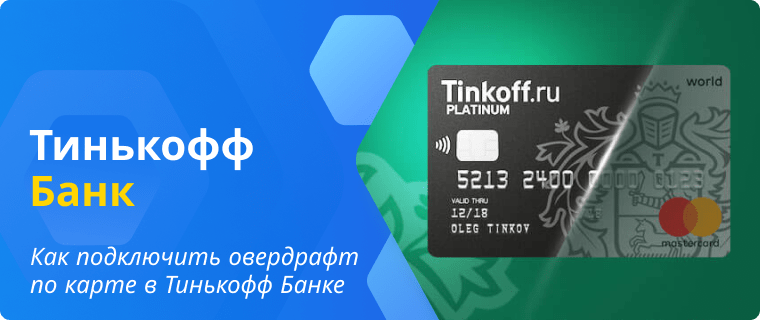
- The cardholder must have a personal account with T-Bank.
- In the personal account, look for the "Activate Overdraft" option.
- Review the terms and sign the agreement by sending an SMS notification.
- Receive the required overdraft amount in your debit card account.
Please note that the bank will request information about your source of income, including your salary. You must provide this data for the overdraft to become available to you. The application review time is no more than 10 minutes.
Подберем предложения под вашу ситуацию
Оставьте телефон — покажем варианты с высокой вероятностью одобрения и актуальными условиями.
- Проверенные предложения
- Без звонков от менеджеров
- Результат в удобном канале
Overdraft on Sberbank debit cards
Since T-Bank has no branches across the country, the overdraft issue is resolved remotely. For Russia's largest bank, Sberbank, an overdraft on a debit card cannot be processed online. In this case, the following conditions must be met:
An overdraft is applied to certain types of debit cards as provided by Sberbank's terms of use.
- You must contact the specific branch that issued your debit card.
- Visit the bank office and provide proof of your salary or bank deposits.
- Sign an additional agreement for an overdraft on the card account.
- Wait for the bank's decision (no more than 2 days).
- The overdraft card is now available to you.
Thus, it is impossible to set up an overdraft online at Sberbank; a personal visit to the credit institution and specifically to the office that issued your card is required.
Pros and cons of overdrafts on debit cards
Statistically, only a small portion of Russians use overdrafts, as this banking product requires a personal visit to the credit institution and compliance with certain formalities. However, there are pros and cons to overdrafts for debit cards.

The positive aspects of this banking product include:
- A small credit amount is available without an additional visit to the bank.
- The annual interest rate is lower than that of credit products.
- There is no fee for cash withdrawals, unless otherwise specified in the credit institution's marketing program.
- Every deposit of funds automatically covers the overdraft amount.
- There is no need to open an additional banking product, such as a credit card.
Nevertheless, there are disadvantages to an overdraft, which are as follows:
- Even though an overdraft is considered a loan, it does not have a grace period.
- A debit card client may go into the negative without realizing the bank has provided an overdraft (i.e., if an agreement is signed, the account is automatically replenished without an SMS notification).
- An overdraft does not distinguish between your own funds and borrowed funds; when conditions are met, you must first repay the bank before replenishing your own balance.
- An overdraft has a much smaller limit compared to a standard loan.
Thus, debit cards with an overdraft can hardly be classified as credit cards, as this banking product does not follow the standard usage patterns of credit cards or regular loans.
Final terms for overdraft
As a rule, the credit institution may independently determine the overdraft term. Since your salary is used to calculate the amount, the overdraft limit and period do not exceed two months' salary. Once the bank grants you an overdraft, the interest rate begins to apply. The average rate across banks ranges from 18% to 20%, but no more than 27% per annum.
If the client fails to fulfill the obligations to repay the funds issued under the overdraft, penalty sanctions ranging from 35% to 45% per annum will apply after 2 months.
It is important to remember that when you replenish a debit card account with an active overdraft, the bank will first direct the funds toward repaying your temporary credit obligations. In this case, the bank does not treat these funds as your savings or deposits. Once you have fulfilled your obligations to the bank, the card is once again considered a standard debit card.
It is necessary to separately note the fees for cash withdrawals. In most cases, the bank does not charge a commission for cash withdrawals; however, some credit institutions do set overdraft fees if you use ATMs for withdrawals. The average commission is 0.5%-1.5% of the transaction amount.
Fee-free withdrawal up to RUB
Up to %
Cashback type —
Cashback —
Fee-free withdrawal up to RUB
Up to %
Cashback type —
Cashback —
Fee-free withdrawal up to RUB
Up to %
Cashback type —
Cashback —
Other posts