 Bank Zenit
 Renaissance Bank
 LOCO-Bank
 T-Bank
 Bank Sinara
 Credit Europe Bank
The best credit cards

Articles about credit cards
AllCredit card reviews
AllEditorial auto-review: The virtual card from the Zaimer service is a convenient financial tool for online settlements. The product is aimed at users who value processing speed and digital accessibility without the need to obtain a plastic carrier. On the pages of the Sravnim24 financial portal, you can get acquainted in detail with the current terms of use, maintenance features, and the procedure for obtaining this card. The service allows you to quickly compare the product's parameters with other market offers before making a decision.


Editorial auto-review: The Privilegiya Credit Card of Opportunities from VTB Bank is a premium bank card with an extended grace period of up to 200 days. The credit limit for the product reaches 1,000,000 RUB, and the base interest rate is 24.9% per annum. The card maintenance cost is 2,990 RUB. Application is available to citizens aged 18 and older without income certificates, with cashback of up to 50% provided. Applications are reviewed starting from 5 minutes. The issuance and maintenance terms allow you to effectively manage personal finances within a premium service package.

Editorial auto-review: The 115 Days 0% Interest credit card from Ak Bars Bank is a classic offering featuring free maintenance and a grace period of up to 115 days. You can apply starting from age 18 without providing income certificates, and a decision is made starting from 15 minutes. Cardholders get access to up to 20% cashback and a credit limit of up to 300,000 RUB. This is a functional financial tool for everyday purchases with a long interest-free period.
Best offers
All


A credit card is a convenient tool that allows you not to postpone urgent purchases until payday. Let's figure out what the pros and cons of credit cards are, who can get one, and whether you should apply for one in 2024.
Should you apply for a credit card in 2024?
Using a credit card from payday to payday is not the best idea—there is a high probability of falling into a debt trap. However, a credit card can become an indispensable helper in certain situations:
- For booking hotels and hostels, and purchasing train and plane tickets. Travel usually needs to be paid for in advance. For this reason, if you haven't managed to save up money for a vacation, you can make a booking or payment with a credit card.
- In case of unforeseen situations. For example, when you need to make an urgent purchase or pay for medical treatment, and your accumulated personal funds are not enough.
- For improving your credit history. If you use a credit card frequently and repay the debt on time, your credit rating will be higher.
At the same time, we do not recommend getting a credit card in the following cases:
- if you cannot control your income and expenses—in this case you risk falling into a debt trap;
- if you plan to make expensive purchases—you will heavily overpay on interest, so in this case it is better to take out a personal loan;
- you do not have a stable income—thus, at any moment you could lose your salary and miss a required payment.
Who can get a credit card and what documents are needed for this?
Since such cards are credit products, they are not available to everyone. Usually, people with a good credit history or a high turnover of funds on a debit card can get them.
As a rule, banks impose the following requirements on future credit card holders:
- hold citizenship of the Russian Federation;
- having permanent registration, a place of actual residence, and a place of work in the city where there is a bank branch;
- at least 18 years of age;
- having a work experience of at least 3 months at the current job;
- having a total work experience of at least 1 year;
- having a permanent income of at least the regional subsistence minimum.
In some banks, requirements may look different. For this reason, we recommend familiarizing yourself with the list on the credit institution's official website in advance.
As for documents, a Russian passport is usually sufficient to get a small limit approved. In some cases, the lender may additionally request other identity documents. For example, a SNILS, driver's license, international passport, and so on. To get a large limit approved, documents confirming income and employment may also be required.
How to get the best credit card?
Getting a credit card is quite simple. To do this, you first need to review offers from several large and reliable companies. However, we recommend getting a card from the bank where you receive your salary—this way you will increase your chances of a positive decision on your application and will be able to avoid commissions when topping up the credit card.
If you have already decided on a card, you can submit an application to the bank. This can usually be done online—on the official website of the credit institution or in the mobile app. To do this, you need to:
- go to the credit card application page, indicate the desired credit limit, and click the “Get” button;
- fill out a short application form, indicating your full name, passport data, registration address and actual residential address, information about your employer, income, and marital status;
- choose the location, date, and time of the meeting with the courier and click the “Get” button.
You can also apply for a card directly at a bank branch. To do this, you need to visit the company's nearest office during business hours and fill out a short application form with the help of a specialist. And in case of a positive decision, sign the agreement.
What to look out for when choosing a card?
You shouldn't take the first card you come across—its terms might not be the most profitable. For example, free cash withdrawals might be important to you, but the chosen card may have a transaction fee.
Thus, when choosing a credit card, we recommend paying attention to the following nuances:
- The minimum and maximum credit limit. If you are getting a credit card to pay for an expensive purchase, you should apply to a loyal bank that offers a large loan amount.
- The grace period. In particular, its duration and what it applies to. If it is important for you to withdraw cash and transfer money, pay attention to cards that do not accrue interest on these operations.
- The interest rate. The bank charges it if you do not manage to close the debt before the end of the grace period.
- Commissions and additional payments. This refers to commissions for cash withdrawals and transfers, as well as additional services. For example, transaction alerts and credit fund insurance.
- The bonus program. Using a credit card can be profitable if the bank awards cashback for purchases.
- Additional options. Some credit cards also provide the ability to repay debts on loans and credit cards issued by other banks and make purchases in installments.
The best credit card offers in 2024
You can get a credit card in almost any bank. We recommend paying attention to the following profitable offers:
Limit
period
 SberCard credit card from Sberbank
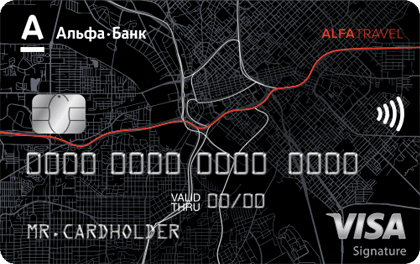
  Alfa Travel Classic credit card from Alfa-Bank
  Virtual credit card from Kviku
  Double Cashback credit card from Promsvyazbank
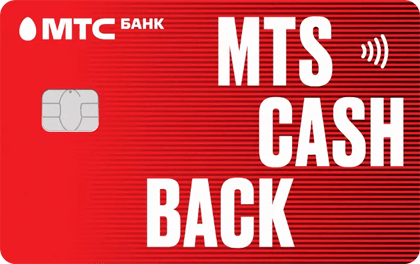
  MTS WEEKEND credit card from MTS Bank
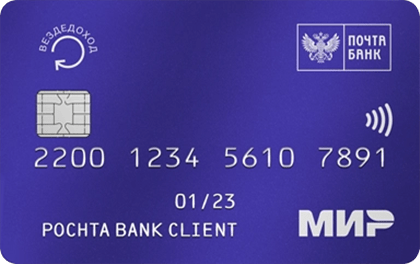
  VezdeDohod credit card from Pochta Bank
  My Freedom credit card from UBRD
  Cashback credit card from Gazprombank
 Pros and cons of credit cards
Among the advantages of credit cards we can highlight:
- Accessibility. While getting loans is quite difficult, banks are more loyal to clients when approving credit cards: they do not request income certificates, overlook minor delinquencies in credit history, and so on.
- Availability of a grace period. You can avoid paying for the use of borrowed money altogether if you repay the debt before the grace period ends.
- No commission for purchases. Some banks also do not charge fees for cash withdrawals and transfers of borrowed funds to other cards.
- Availability of a bonus program. Not all banks award cashback for purchases. However, it is provided on the most popular credit cards.
- Can be used at any time. To get a consumer loan, you need to apply to the bank and wait for the lender's decision, then sign an agreement. All this takes a lot of time. You can use a credit card at any time, as the credit limit is restored immediately after the debt is repaid.
As for the disadvantages, we can include:
- High interest rate. Overpayment on credit cards is much higher than on consumer loans. For this reason, it is better to close the debt on the card before the grace period ends.
- Mandatory monthly payment. To avoid delinquency, it is necessary to make mandatory payments. Sometimes their amount reaches 10% of the debt amount.
- Commission and interest for cash withdrawals and transfers of borrowed funds. The maintenance terms of some credit cards allow withdrawing and transferring money for free. However, a large overpayment is often provided for these operations.
- Risk of spending the entire credit limit. In this case, you risk falling into a serious debt hole.
Conclusion
A credit card can be both a helper and a cause of falling into a debt hole. For this reason, before applying, you should carefully weigh the pros and cons, assess your financial situation and earnings stability.