 Bank Zenit
 Renaissance Bank
 LOCO-Bank
 T-Bank
 Bank Sinara
 Credit Europe Bank





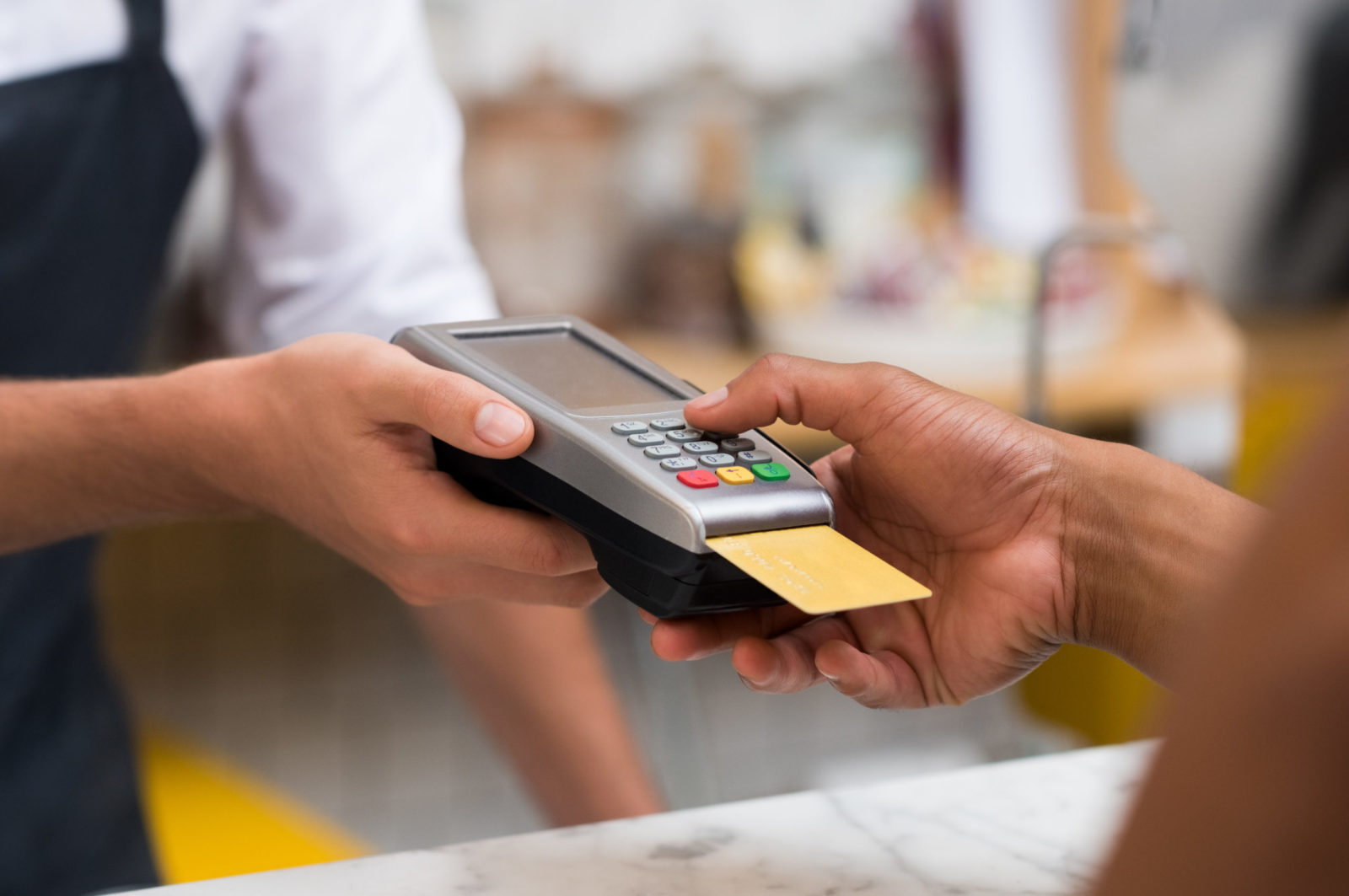
What is an acquiring bank

Definition in simple words
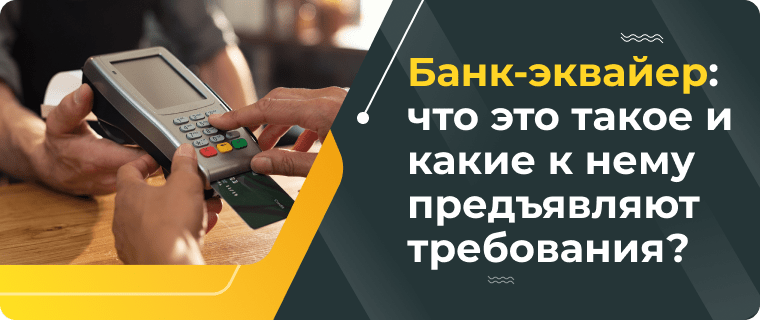
Acquiring banks are credit institutions that provide acquiring services. They ensure the installation of card acceptance equipment in retail networks and service financial transactions related to bank card payments.
It is important not to confuse the acquirer with the issuing bank, although in some cases, a credit institution may combine both functions. The issuer issues cards and maintains accounts, but is not responsible for ensuring cashless transactions. During payment, a request is sent from the issuer through a payment gateway to the acquirer, and the latter can approve or decline the transaction. This procedure happens automatically in a few seconds.
Requirements for acquiring banks
There are only a few requirements for acquiring banks:
- holding a license;
- ensuring cashless payments;
- having an in-house processing center;
- operational reliability.
These criteria are quite important.
Подберем предложения под вашу ситуацию
Оставьте телефон — покажем варианты с высокой вероятностью одобрения и актуальными условиями.
- Проверенные предложения
- Без звонков от менеджеров
- Результат в удобном канале
What functions does the acquiring bank perform?
When connecting an entrepreneur to acquiring, the bank assumes the obligation to perform certain financial operations. Main functions:
- ensures the reliability of cashless settlements;
- the functions of the acquiring bank include the provision of equipment and software, specifically POS systems, terminals, and online cash registers;
- technical support;
- connection and maintenance of equipment;
- processing of issuers;
- organization of document management, payments, and maintenance of transaction documentation.
The credit institution earns revenue through a commission on the client's turnover, as well as fees for equipment installation and maintenance. As a rule, business equipment is provided by the credit institution for temporary use, but in certain cases, its purchase is possible.
Functions and operating principle
Let's examine the complex system of transfer processing in detail. The acquiring bank provides card authorization. This terminology implies data exchange between transaction participants. Each request has its own numerical code, which is transmitted to the service. The operating financial organization receives the information. Requests are sent to the host, from which customer identification is requested. The customer enters the PIN code on the device, after which the request processing begins.
After the information is transmitted to the issuing bank, the server searches for the recipient's account. The entire procedure takes a few seconds. During this time, many numerical combinations are reviewed, and then a message is sent containing a positive or negative response to the transaction.
At the end of the day, the issuing bank and the acquirer exchange information, after which the funds are transferred to the service provider's corporate account. Until the commission is deducted, the funds will be frozen. Once all documentation is prepared, the funds can be used without restrictions.
The first documents are signed between the service provider and the recipient. This is an acquiring agreement. A copy of this document is kept at the enterprise, and accounting is carried out in automated programs. They configure the possibility of cashless payment and process the transaction itself. The recipient always retains a copy of the receipt, which serves as confirmation that the transaction was successful and that the bank must transfer the money for it. At the end of each working day, the organization reports on completed transactions. To do this, an electronic journal is sent to the bank, which is automatically generated by the terminal after checking the documentation. Funds are credited to the account after the commission is deducted.
Types of acquiring
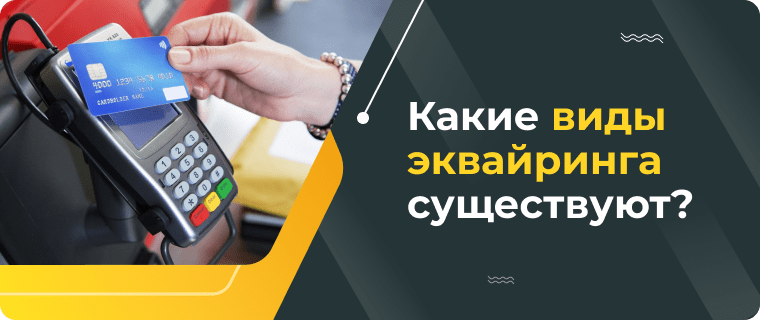
Entrepreneurs may run completely different businesses, so banking technologies adapt to various activities, particularly acquiring.
Specific service options are available to companies:
- There is in-store acquiring, often called stationary acquiring. The bank installs equipment at specific retail locations and terminals. Devices are rarely sold; most often, the credit institution provides them for temporary use.
- There is also mobile acquiring. In this case, instead of stationary terminals, the acquirer provides portable terminals—card readers. These are compact devices that can be used anywhere. Connection is provided via a smartphone using a cable or Bluetooth. The device has Internet access. Mobile readers are rarely offered for rental; most often, they are sold.
- Another variety is internet acquiring. If an entrepreneur conducts trading activities online, they cannot do without this service. In this case, there are no terminals. The acquirer provides the client with a special plugin that is installed on the website. After this, buyers get the opportunity to pay for goods with a card.
How the acquiring bank processes a transaction
The transaction for the buyer takes only a few seconds. To complete it, it is enough to tap the card on the terminal or insert the plastic card into it. Many important processes take place within a short time.
The seller enters the amount, and the buyer taps the card or inserts the plastic into the device. The equipment transmits a request to process the transaction to the acquiring bank, and the latter makes a request to the issuing bank to verify the feasibility of the transaction. The issuer provides a response; if the card balance is insufficient or it is blocked, a refusal is issued. If the issuer approves the transaction, the system gives a positive response, and the terminal prints a receipt. At the end of the transaction, the seller gives the buyer the goods and a copy of the payment receipt.
Interestingly, at this moment, the connection with the acquiring bank ends only for the buyer. In fact, the provision of the service for the bank and the entrepreneur does not end. First, the acquirer credits the funds to the legal entity's account within 3 business days, then it sends the documents to the issuer, after checking which the latter reimburses the expended funds. For the duration of all checks, the funds in the cardholder's account are simply frozen—not debited, but left in limbo.
Consequently, in simple terms, an acquiring bank is a financial organization that ensures the acceptance of payments from bank cards.
Recommendations for choosing a bank
To choose a good acquiring bank, an entrepreneur should pay attention to the following nuances:
- complaints about system defects and functional failures—this is very important for smooth operation and the elimination of potential losses from customer churn;
- the quality of the terminals provided—sometimes banks save on equipment, and it has to be constantly rebooted;
- response speed—some credit institutions process a transaction in just a few seconds, while with others you have to wait about a minute;
- transfer duration—it is bad when money is frozen in the account for a long time; it must be constantly in motion.
- the fee for performing services.
These criteria must be evaluated comprehensively. In addition to the listed indicators, the business owner should also pay attention to the reputation of the credit institution itself. If the bank frequently experiences system failures, this will negatively affect acquiring operations.

Loan term up to 365 days
From %
Amount — up to 100,000 RUB
CREDIT HISTORY —
Loan term up to 30 days
From %
Amount - up to 30,000 RUB
CREDIT HISTORY —
Fee-free withdrawal up to RUB
Up to %
Cashback type —
Cashback —
Other posts