 Bank Zenit
 Renaissance Bank
 LOCO-Bank
 T-Bank
 Bank Sinara
 Credit Europe Bank




What is an issuer?

Securities and issuers: what is the connection between them
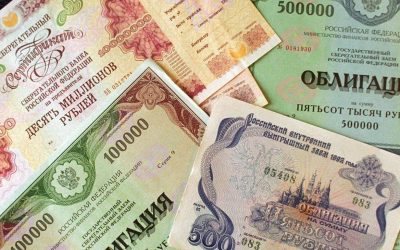
Under Russian law, every issuer must issue specific types of securities. These are mainly bonds, depositary receipts, options, and stocks issued by commercial organizations, as well as government representatives.
Documents confirming property rights to a capital share can be equity securities or non-equity securities.
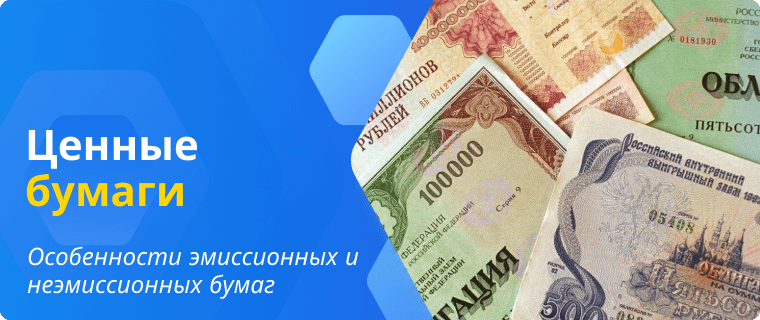
Characteristics of equity securities:
- mass production;
- mandatory registration with relevant authorities;
- strict issuance procedure;
- regulation by a unified legislative framework;
- securing equal rights throughout the entire circulation period of these securities.
Nuances characterizing non-equity securities:
- absence of mass production;
- no mandatory registration;
- regulation by various legislative acts.
The most popular are promissory notes, checks, and certificates.
Starting from 2020, equity securities can be issued in electronic formats with centralized custody, while non-equity securities can be in any form (documentary or electronic). According to current legislation norms, both documentary and book-entry securities have the right to exist.
The law regulating the issuance of certificates, bonds, and stocks is Federal Law No. 39-FZ "On the Securities Market", as well as the law "On the Peculiarities of Issuance and Circulation of State and Municipal Securities." Federal Law No. 152 of November 11, 2003, "On Mortgage Securities," and Federal Law No. 48 "On Bills of Exchange and Promissory Notes" regulate the non-equity securities market.
Who can qualify as an issuer
Issuers can exclusively be legal entities that have obtained the right to carry out issuance.
- Government authorities.
- Joint-stock companies.
- The Central Bank.
- Private enterprises (not to be confused with individual entrepreneurs).
- Companies, as well as funds.
Issuers differ in their location, form of ownership, and business activities.
By the way, the largest issuers in Russia are Sberbank, Gazprom, Lukoil, the network retailer X5 Retail Group, the gas company Novatek, and a number of other organizations.
Public authorities
State bodies mean local, regional, and federal organizations (institutions) that are interested in short-term or long-term financing of current expenses. It is they who make the decision to place shares, bills of exchange, or certificates on stock exchanges.
Successful investment projects generate good profits, which are partially returned to investors in the form of dividends or payouts.
Joint-stock companies
A JSC is a type of legal entity organizational and legal form in which the authorized capital is divided into parts, each of which corresponds to the value of a security, such as a share. Individuals or legal entities become shareholders after contributing a sum to the company's authorized capital and receiving shares, the amount of which is equal to the contributed sum.
Example: A company contributed 40 000 RUB to the authorized capital. The established price per share is 2 000 RUB. This means the company issues 20 shares.
JSC participants are not liable for the obligations of the institution; they do not bear the risks associated with the company's operations.
Central Bank
The largest issuer is the state, since only the Central Bank has the right to issue money. Through additional issuance, it is possible to control the inflation rate and price growth in the market, preventing them from exceeding certain values.
Please note! The Central Bank has the right not only to issue money, but also to withdraw it from circulation. At the same time, the decision to withdraw funds is made not by the Central Bank of the Russian Federation, but by the Ministry of Finance.
Private enterprises
Private enterprises wishing to finance their expenses also have the right to issue bonds.
There are cases when private enterprises are denied registration. There are reasons for this. A refusal can be received if certain discrepancies are found in the documents submitted for registration. If the issuer violated the issuance procedure, that is another reason for refusal. Registration will be denied if the enterprise has not paid fees or does not have the right to issue bonds.
Companies and funds
Other companies, stock exchanges, and investment funds can act as issuers. They are participants in the stock market who organize purchases or sales and facilitate the conclusion of transactions by other market participants.
Подберем предложения под вашу ситуацию
Оставьте телефон — покажем варианты с высокой вероятностью одобрения и актуальными условиями.
- Проверенные предложения
- Без звонков от менеджеров
- Результат в удобном канале
What stocks, bonds, promissory notes, and certificates are issued for
The main task of securities is to raise money for the development of the emission initiator's business. They can be transformed into investments by directing them into companies that generate good income. Shares and certificates are placed on stock exchanges. The legal entity offers them to everyone who considers the acquisition of shares and bonds a profitable investment of funds.
Funds are raised in the following ways:
- through the sale of a property right, share, or stake;
- through borrowed funds.
Issuance can be public and private.
Public issuance — shares are issued to a wide range of investors and is accompanied by the disclosure of information about the issuance.
Private issuance — carried out for a specific circle of investors who want to purchase the necessary financial instruments.
Note! An issuer engaged in the issuance of financial instruments takes risks. Its risk is related to the fact that the placement price may be reduced, commission payments will increase, an underwriter may be incorrectly chosen, or the favorable time for placing securities may be missed.
Forms of issuance
There are several forms of issuance:
- monetary;
- deposit-check;
- issuance of securities.
Monetary issuance is the procedure of putting banknotes into circulation (only the national currency is allowed to be issued in Russia). It is carried out by the Central Bank of the Russian Federation.
Please note! Monetary issuance in the Russian Federation currently has no gold backing.

Monetary issuance is subject to established rules:
- absence of ratios between the ruble and any precious metals;
- monopoly right (only the Central Bank issues state currency into circulation);
- the only means of payment in Russia approved at the legislative level is the ruble;
- no limits on exchange amounts;
- issuance — in cash, non-cash.
Deposit-check issuance can be carried out both by the main bank of Russia and by private enterprises. It usually occurs during the issuance of credit funds.
Regarding the issuance of securities, this financial instrument is used to solve specific tasks. The issuance of shares (bonds) is permitted not only to government authorities, but also to other organizations authorized to do so.
Characteristics of securities
A security is a document that grants certain rights to its owner, which are protected by the state and set forth in regulatory acts governing processes related to them. Shares, promissory notes, certificates, and other instruments have strong protection against counterfeiting.
Each security includes a set of characteristics: temporal, spatial, and market.
Temporal characteristics refer to "traits" that are measured by time. These include:
- circulation periods of securities;
- payment of income on shares, etc.;
- Rights of action.
Spatial characteristics include the type of market where the securities are traded, the issuer's nationality, and the document's physical form.
Market characteristics include:
- procedures for recording and transferring the document;
- form of issuance;
- type of issuer and capital;
- registrability;
- presence of income and face value;
- risk level;
- degree of negotiability.
Securities may not have a traditional paper form. They are often produced in electronic versions. Ownership rights for such documents are recorded by a registrar.
Obligations
The issuer is equivalent to a seller. It supplies goods to the stock market, the quality of which is determined by its status and financial performance. To place their products on the stock market, banks, government agencies, or private enterprises must meet established criteria. If an organization lacks the necessary status or required income, it does not have the right to list securities on the exchange.
Note! The value of shares depends directly on the issuer's performance. The more successful the company, the more expensive the shares.
Once the security is delivered to the recipient, the issuer incurs certain rights and obligations toward them.
- Concluding a contract with a professional market participant for depository services to form a shareholder register.
- Creating a register of shareholders and certificate holders, as well as protecting it from third parties.
- Ensuring the conditions that were stipulated at the time of the sale of shares or certificates.
- Providing truthful information about its activities.
The issuer may earn income from its activities and perform its functions, provided they do not contradict the laws of the Russian Federation.
Stages of issuance
To issue securities to the market, one must go through a simple procedure consisting of several stages:
- making a decision to issue securities;
- approval;
- registration;
To complete registration, the issuer must specify the type of security, the face value per unit, provide a list of property and obligation rights granted to the holders of the security, and provide additional information about the shares (bonds, etc.).
- production of security certificates;
- disclosure of information;
- placement;
- preparation of a report on the results of the issuance;
- disclosure of information on the results of the issuance;
- making amendments.
The issuance process can be canceled or suspended if a violation of Russian law is discovered, demand for the issued securities is low, or the issuer provides information that does not correspond to reality.
Issuance of bank cards
In addition to securities, money, and other assets, a bank issues payment cards, performing the following functions:
- issuance;
- issuing bank cards to clients;
- authorization (when performing transactions using bank cards, it is the bank that decides whether to decline or approve the submitted request);
- debiting funds from the card;
- protection of the banking product;
- reporting to the client (the bank provides statements for all transactions);
- connection to ApplePay and GooglePay services;
- sending SMS and push notifications;
- activation of loyalty programs;
- continuous customer engagement.
This is only a part of the obligations that a financial and credit institution bears toward its clients. The list is much longer; please review it in the bank service agreement for your plastic card.
Did you know? According to 2018 data, financial institutions issued about 270 million cards. The most popular products belong to the MasterCard and VISA payment systems.
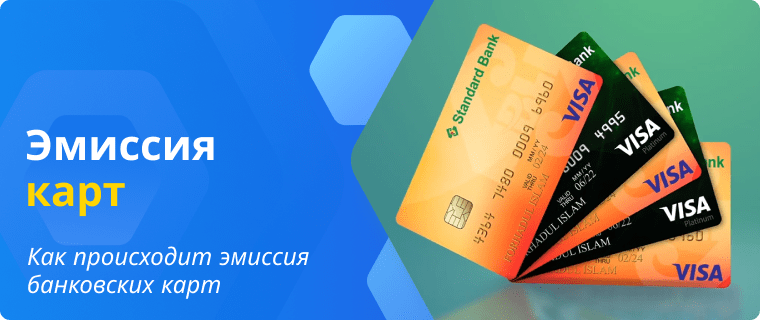
The issuance of bank cards (the activity of producing payment products) takes place in several stages:
- A contract is executed with the client.
- A card account is opened.
- The bank orders the manufacturing of the card.
- The card is issued to the client.
- Card transaction processing.
- Account closure.
- Withdrawal of the bank card from circulation.
- Destruction of the payment instrument.
Bank card issuance: features.
- A pre-approved design is applied to paper of the appropriate format.
- To secure the ink, the image is laminated.
- The card is cut out using a special tool.
- Next, a chip is embedded into the card. The chip contains the information required for reading.
- Applying the magnetic stripe is the next step in card manufacturing.
- Personalization. A 16-digit number, as well as the owner's first and last name, are applied to the credit card.
Card production is carried out using modern, high-tech equipment with the application of innovative software. Strict control is maintained at every stage of production.
Conclusion
To summarize, issuers can be either government bodies or institutions authorized to issue securities (certificates, promissory notes). They must meet prescribed requirements and have authorized capital. Public entities that have gone public gain the ability to sell stocks or bonds. Any company wishing to be an issuer must provide shareholders with reports on its operations and financial standing.
The obligations of issuers are regulated by law. For example, the operations of banks are overseen by the main regulator — the Central Bank of the Russian Federation. If any violations are detected, an organization can be removed from the registry, after which it will no longer be able to sell issued securities on stock exchanges.
Loan term up to 365 days
From %
Amount — up to 100,000 RUB
CREDIT HISTORY —
Loan term up to 30 days
From %
Amount - up to 30,000 RUB
CREDIT HISTORY —
Fee-free withdrawal up to RUB
Up to %
Cashback type —
Cashback —
Other posts