 Bank Zenit
 Renaissance Bank
 LOCO-Bank
 T-Bank
 Bank Sinara
 Credit Europe Bank






Which banks' cards are not seized by bailiffs?

On what grounds do banks freeze credit cards?
You must understand that banks do not initiate the debt account seizure procedure on their own. This often happens at the request of the Federal Bailiff Service.
According to Federal Law No. 229-FZ dated October 2, 2007, "On Enforcement Proceedings," a bailiff has the right to seize the debtor's movable and immovable property, including bank accounts, to recover debts.
Under the same law, the bailiff has the right to request necessary information about the debtor, specifically regarding open bank accounts, and to issue instructions for the enforcement of requirements contained in enforcement documents.
Banks, in turn, do not have the right to refuse to freeze a client's accounts. Failure to comply with the bailiff's requirements may lead to regulatory sanctions.
Bank cards are frozen in the following manner:
- The bailiff sends an official request to the bank regarding the debtor's open accounts.
- The bank, in turn, sends complete information on the client's accounts to the FSSP in a response message.
- The bailiff sends a writ of execution to the credit institution.
- The bank seizes all or part of the client's accounts.
- The credit institution writes off all or part of the incoming funds in the client's account and transfers them to the Federal Bailiff Service.
- The bailiff sends the money to the claimant to pay off the debt.
Which banks' cards are not seized by bailiffs?
As mentioned above, any bank operating in Russia is obliged to comply with the requirements of the bailiff. There are no exceptions in this case.
If you are wondering which bank is best to open a card with so that it won't be frozen by bailiffs, we must disappoint you: there are no such institutions in our country. Sooner or later, you will face the write-off of your funds anyway.
What should you do if allowances or alimony are deposited onto a frozen card?
Bailiffs can freeze your card even if you receive allowances or alimony on it. Having benefits does not give you the right to default on your obligations.
However, there are payments that are protected by law and cannot be written off to fulfill third-party obligations. Article 101 of Federal Law No. 229-FZ dated October 2, 2007, "On Enforcement Proceedings," strictly specifies the types of income that cannot be levied. These include:
- payments for compensation for harm to health;
- payments for compensation for harm in connection with the death of a breadwinner;
- payments to persons who received injuries while performing official duties, or to members of their families in the event of their death;
- payments to citizens affected by radiation or man-made disasters;
- payments to citizens in connection with the care of disabled citizens;
- monthly and annual payments accrued to certain categories of citizens;
- alimony, as well as payments for the maintenance of minor children during the search for their parents;
- payments in connection with a business trip, transfer, hiring or assignment to work in another locality, in connection with the wear and tear of tools, cash amounts paid by the employer in connection with the birth of a child, the death of relatives, or marriage registration;
- insurance coverage under mandatory social insurance, with the exception of old-age or disability insurance pensions, as well as funded pensions, urgent pension payments, and temporary disability benefits;
- survivor's pension;
- payments added to survivor's pensions;
- allowances and payments to citizens with children and pregnant women;
- maternity capital funds;
- amounts of lump-sum financial assistance;
- amounts of full or partial compensation for the cost of vouchers, excluding tourist vouchers, paid by employers to their employees and/or their family members, disabled persons not working in the organization, to sanatorium and health-resort institutions located on the territory of the Russian Federation, as well as amounts of full or partial compensation for the cost of vouchers for children under the age of sixteen to sanatorium and health-resort institutions located on the territory of the Russian Federation;
- amounts of compensation for travel costs to the place of treatment and back (including for an accompanying person), if such compensation is provided for by federal law;
- social funeral allowance;
- funds allocated to citizens affected by an emergency as lump-sum financial assistance and/or financial assistance in connection with the loss of essential property and/or as a lump-sum allowance to family members of citizens who died (passed away) as a result of an emergency and to citizens whose health was harmed of varying severity as a result of an emergency;
- payments made in accordance with regulatory legal acts of the President of the Russian Federation and the Government of the Russian Federation to provide social support measures to certain categories of citizens and families with children;
- cash payments made to low-income citizens as part of the provision of state social assistance, including on the basis of a social contract;
- cash payments made to military personnel, persons serving in the troops of the National Guard of the Russian Federation and holding special police ranks, and employees of the internal affairs bodies of the Russian Federation in connection with participation in military operations, operations, combat missions, and the performance of tasks outside the territory of the Russian Federation;
- alimony.
The bailiff cannot freeze the payments specified above. However, this does not apply to other funds deposited into the same card—they are fully subject to recovery, even if your card is intended for receiving allowances.
Starting June 1, 2020, banks are required to label every deposit into an account with a specific digital code. If the assigned code falls into the exception category, the funds will remain untouched. Otherwise, the credit institution will write them off pursuant to a writ of execution.
We will find offers tailored to your situation
Leave your phone number, and we will show you options with a high approval probability and current terms.
- Verified offers
- No calls from managers
- Results delivered through your preferred channel
Can an electronic wallet be frozen?
If there is a high probability that your bank card will be blocked, you can keep your funds in an electronic wallet. With it, you can still make transfers, pay for housing and communal services, internet and mobile communications, and make purchases in online stores. Some payment systems also issue plastic cards linked to electronic wallets.
However, please note that your electronic wallet account must be unverified. In this case, transaction limits will be more modest, but bailiffs will not be able to find out about your funds.
Which cards are frozen first?
First of all, the bailiff-executor tries to find the debtor's place of employment. If successful, they send a writ of execution demanding the withholding of 50% of the employee's wages. In this case, freezing accounts may not even be necessary.
If the debtor has no official job, the bailiff sends official requests to the largest Russian banks: Sberbank, VTB, Alfa-Bank, Raiffeisenbank, Otkritie, Gazprombank, and so on. There is a very high probability that the person is a customer of one of these credit institutions.
If the FSSP still finds no open accounts in these banks, it sends requests to smaller regional credit institutions, and then to companies in other constituent entities of the Russian Federation.
Накладывают ли арест на карты Т-Банк Банка?
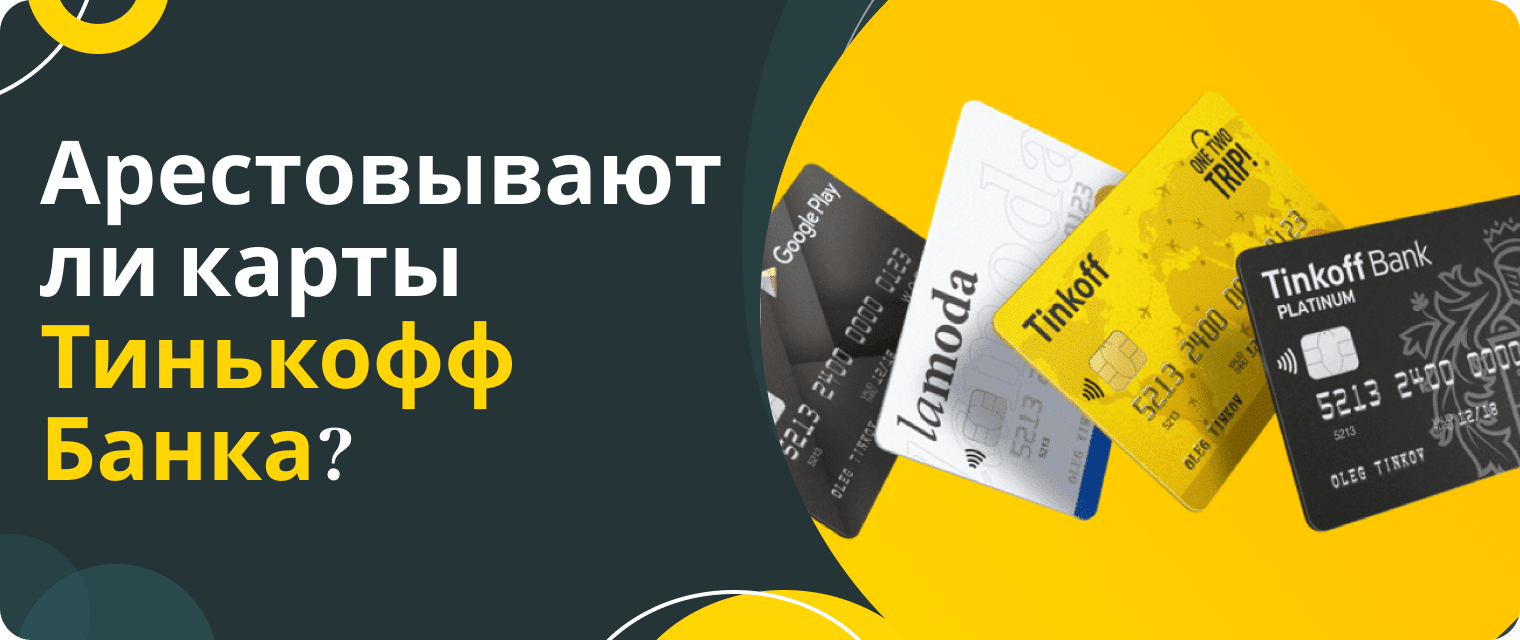
В сети можно найти информацию о том, что Т-Банк не передает сведения о клиентах в Федеральную службу судебных приставов, а потому держатели карт этой кредитной организации могут не переживать об аресте счетов.
На самом деле это, конечно, не так. Т-Банк, как и любой другой банк, обязан передавать всю необходимую информацию судебному приставу-исполнителю. Более того, ФССП знает, что это одна из крупных российских кредитных организаций, а потому обязательно направляет в нее запрос. Поэтому рано или поздно клиенты Т-Банк в любом случае сталкиваются с арестом дебетовых карт.
To sum up: there is no bank card that bailiffs cannot freeze — banks are required to provide customer data upon request, so sooner or later information about any debtor will appear in the FSSP.
0% for 10 years
From 0 %
Limit - up to 500000 RUB
Период - 0 дней

Withdrawal with 0% fee up to RUB 0
Up to 0 %
Тип кешбэка - Рубли
Кешбэк - Нет
Withdrawal without fee up to 100,000 RUB
Up to 0 %
Тип кешбэка - Рубли
Кешбэк - 10%
Other posts